



It's the time of year when Ohioans see the possibility of tornadoes and dangerous windstorms, and safety leaders say people should plan for how to deal with those situations.
For many who live in homes, that might be heading down to the basement. But that's not possible for some Ohioans, who have to find other options.
It鈥檚 been about two years since a tornado in western Ohio, killing three people and leaving hundreds of homes and businesses damaged. And while tornadoes can happen at any time, the deadliest ones on record in Ohio have hit in April. That includes the F-5 twister with winds of more than 300 miles an hour that and killed 33 people in 1974.
Tornado sirens were not in use in Xenia at that time. But in the years that have followed, sirens have been installed in many cities and go off during tornado warnings. Those sirens spotlight the need for safe spots for people to seek shelter in a safe place.
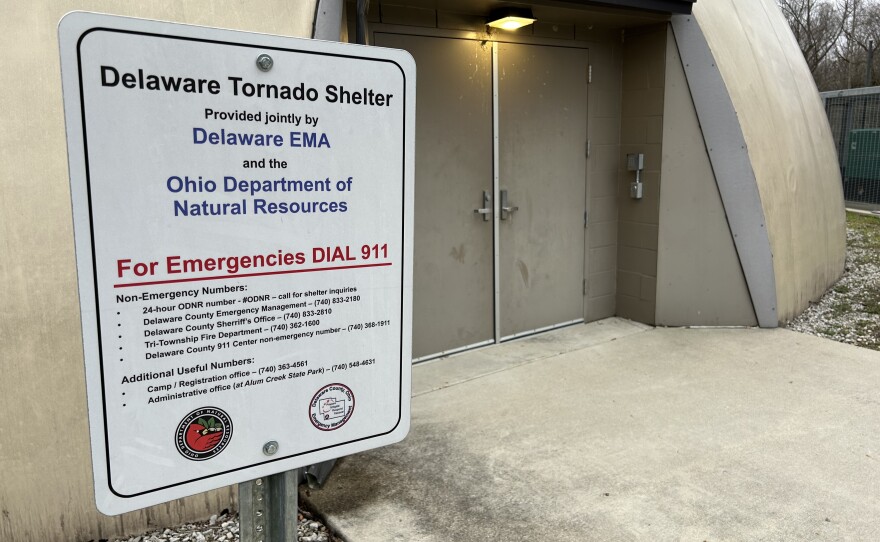
鈥淭here have been over the past five to 15 years or so, a number of community safe rooms that have been installed in key locations. Several in Licking County, one in Delaware County," said Sean Miller, operations administrator for the Ohio Emergency Management Agency (EMA).
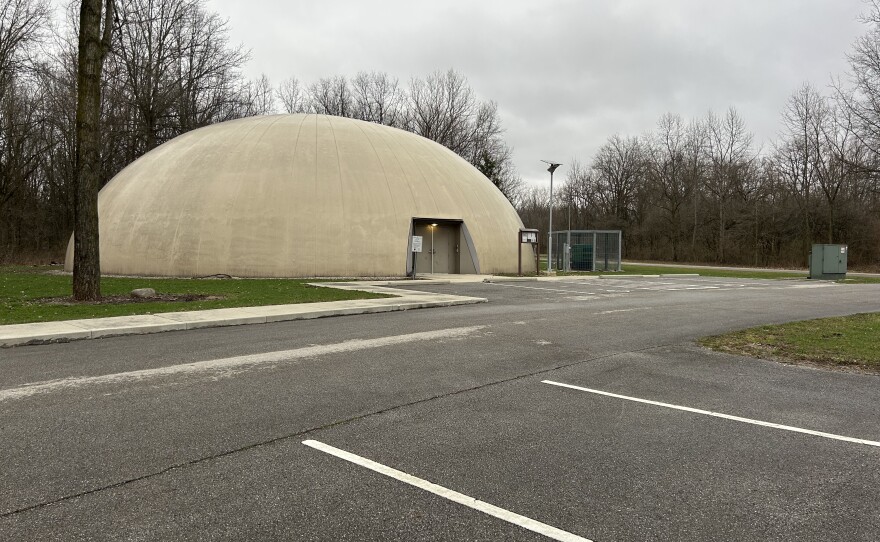
That shelter in a campground area at Delaware State Park is a tan, rounded concrete and steel structure that might look like something out of "The Jetsons".
鈥淲e know that tents and RVs can be extremely susceptible to tornadic winds or even extremely fast straight line winds from other severe weather events," said Alex McCarthy, director of emergency management for Delaware County. "This gives folks an opportunity to shelter from those storms.鈥�
McCarthy said it may look like a bubble, but it's hard to pop.
鈥淲e have the ability here to withstand up to F-5 winds and even faster in that, rated for up to 250 mph. There's the ability for folks to bring pets and animals in here, so long as pets are on leashes and fully controlled. And it is also built to be compliant with all the ADA laws," McCarthy said.
But it鈥檚 not made for comfort. McCarthy said it can house up to 850 people and can get pretty crowded when the campground is full.
鈥淪ometimes it can be a little noisy in here if it's packed with people. So make sure you bring earplugs or headphones if you do have an aversion to loud noises," McCarthy advised.
Ohio EMA said it's hard to tell how many public and private shelters and safe rooms are across the state, but 374 such facilities have been built with FEMA grants since 2013. Mobile home residents are very at-risk during tornadoes, so these kinds of shelters could be built for them.
People living in multi-story apartment buildings need to plan where they can go during tornado warnings, either to a basement or to an inside room with no windows.
But there's one population at particular risk鈥攗nhoused Ohioans.
鈥淎 lot of folks living on the land don't know when there's a tornado coming," said Marcus Roth with the Coalition on Homelessness and Housing in Ohio (COHHIO).
Roth said there鈥檚 no strategic messaging to people who are unhoused, and it鈥檚 often hard to warn homeless Ohioans to seek shelter when they may not have cell phones to get alerts.
鈥淗opefully they have street outreach workers going out visiting folks, checking on them, trying to get them into programs and services," Roth said. "But in some places, it just depends on what resources each community votes to these kinds of street outreach and other kinds of services.鈥�
Roth said homeless Ohioans will need to seek refuge wherever they can, such as in public libraries or other spaces.
Safety leaders said it's important to think about what your emergency plan will be before a tornado watch or warning is imminent. Miller advised Ohioans to sign up for emergency alerts through their county EMA office, which can be transmitted to their phones when bad weather poses a danger. And he said the one place you don鈥檛 want to be is on the road.
"Staying in your car presents risk. Finding a ditch presents risk. Both are not a good place to be," Miller said. "In that given scenario, the driver or the passengers will have to make tough decisions very quickly. But again, the best alternative is to get to shelter beforehand. A lot of times people don't go to shelter."
And experts said the most important thing is to make plans now, before you need to exercise them.
(This story also it appeared on the "The State of Ohio". To watch the story, click .)