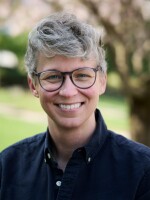
Indigenous Canadian painter Kent Monkman sees how museums in North America play an important role in telling the story of this continent, and he wants to push back against those stories.
鈥淲hat I've done with my own work is to challenge the museums that I work with to tell the story and to start that story from somewhere else,鈥� Monkman said.

As a member of oc锚kwi s卯piy (Fisher River Cree Nation) in Manitoba, Monkman mimics the landscape paintings of 19th century settler artists like Albert Bierstadt and Frederic Edwin Church but includes the Indigenous people that were either romanticized, stereotyped or simply left out.
鈥淭hat was my entry point to challenge their work, to challenge the subjectivity of their work and to reverse the gaze,鈥� Monkman said. 鈥淚t became a very important project for me to really take on the weight of this art history.鈥�

鈥淜ent Monkman: History is Painted by the Victors鈥� features more than 30 large-scale paintings depicting a very different history than what is typically seen in the American painting galleries of today鈥檚 art museums. The show is on view at the Akron Art Museum through August 16.
Another perspective
The exhibition was organized by the Denver Art Museum and the Montreal Museum of Fine Arts. Denver Art Museum Curator of Native Arts John Lukavic said Monkman is doing something that other artists aren鈥檛 doing by combining the look of 19th century landscapes with Indigenous subjects.
鈥淸He is] intentionally using the colonial gaze to flip the power dynamics in the authoring of art history,鈥� Lukavic said.

The paintings are up to 7 feet high by 10 feet wide and have an imposing presence in the galleries.
鈥淟arge paintings have this authority that is what I wanted to invest my work with,鈥� Monkman said. 鈥淲hat I wanted to do with my practice was to imbue Indigenous experience, historical and contemporary, with that same gravitas, that same weight and authority, that the European version of this history has.鈥�
L茅uli Eshr膩ghi, curator of Indigenous practices at the Montreal Museum of Fine Arts, is the exhibition鈥檚 co-curator and of S膩moan heritage.
Eshr膩ghi said they were blown away by Monkman鈥檚 work when they first saw it and said the show is an empowering and affirming intercultural project for them.
鈥淸The exhibition] is to really be immersed in the grandeur of the scale of his work, but also addressing grand narratives of European art history, European settler colonial practices around the world head on, and to really see Indigenous perspectives front, right and center,鈥� Eshr膩ghi said.

Miss Chief
To help tell his story, Monkman created the alter ego Miss Chief Eagle Testickle. The name is a play on the words mischief and egotistical.
Miss Chief welcomes visitors to the exhibition in the painting 鈥淭he Great Mystery,鈥� which takes inspiration from two works at the Hood Museum of Art at Dartmouth College. The background is based on the Mark Rothko painting from 1953 鈥淟ilac and Orange Over Ivory,鈥� while Miss Chief sitting on a horse mirrors a 1922 Cyrus Edwin Dallin sculpture 鈥淎ppeal to the Great Spirit.鈥�
The painting challenges the stereotypical image of a Native American man riding a horse.
鈥淚nstead of that we have Miss Chief Eagle Testickle with the shoulders raised and really offering a perplexed look at the audience,鈥� Eshr膩ghi said. 鈥淧erhaps asking, 鈥榃hat are you going to do with the knowledge that has been imparted with you.鈥� And also thinking, of course, about reality, about existence.鈥�
Miss Chief is gender fluid and further challenges Indigenous stereotypes in her high heels and Louis Vuitton clothes.

鈥淲hen settlers arrived and they encountered two-spirit people, gender-fluid people here in North America, they struggled understanding how there could exist a person in a community who was accepted for that and wasn't treated as an outsider or discarded,鈥� Monkman said.
鈥楬istory is Painted by the Victors鈥�
The exhibition takes its title from Monkman鈥檚 2013 painting 鈥淗istory is Painted by the Victors鈥� in which Miss Chief is found in a large landscape at an easel painting Lieutenant Colonel George Custer and the 7th Calvary.
鈥淭his particular work truly encapsulates a variety of aspects of what we're trying to do in the exhibition, and that is to look at the power dynamics on the authoring of histories,鈥� Lukavic said. 鈥淭he romanticized landscape is a recreation of Albert Bierstadt's 鈥楳ount Corcoran.鈥� In doing this, he's layering upon the layer, this idea of who gets to author history.鈥�

While Monkman said he respects and admires the work of the 19th century landscape painters, he wants his large-scale paintings to tell stories of Indigenous perspectives.
鈥淭here is a kind of a resistance in my work in pushing back,鈥� Monkman said. 鈥淚 wouldn't describe it as anger, but I would say that there is a level of challenge to the authority that their paintings had in our museums, telling a very narrow perspective on the story of this continent.鈥�
Sharing important stories
A more recent focus of Monkman鈥檚 is to inform his audience about the history of Indigenous boarding schools in the United States and residential schools in Canada. The federally sponsored programs, by both nations, have been recognized for the deaths of thousands of Indigenous children in the 19th and 20th centuries.
鈥淚t was about trying to assimilate Indigenous people into the mainstream culture by taking children and putting them into basically an internment camp, an indoctrination camp where they would be forbidden to speak their language, where they'd be forced to learn English,鈥� Monkman said. 鈥淢y grandmother was one of those young girls who was put into a residential school with her siblings. And that continues to have intergenerational impact in our communities and in our families.鈥�

A celebratory aspect of the exhibition is a series of portraits inspired by the words of Indigenous Canadian Senator Murray Sinclair.
鈥淸Sinclair] advised our community [to] not attract more vitriol and hate from our settler neighbors, let's build monuments to our own people,鈥� Monkman said. 鈥淪o that's what I decided to do. Because I'm a painter, I decided to make portraits.鈥�
Portraits of Indigenous scholar Tasha Beeds and Indigenous activist Pauline Shirt stand apart from the landscapes in the exhibit, as does a portrait of Indigenous artist Violet Chum, who also serves as a model for Monkman鈥檚 work.

The Akron Art Museum is the only Midwest stop for the Monkman exhibit, and curator Wendy Earle said she has wanted to exhibit his work for a long time.
鈥淚 think people are going to have a lot of emotions,鈥� Earle said. 鈥淏ut I hope what they come out of it with is a sort of catharsis of understanding that as long as we are working together as a community and acknowledging some of our past, we can build a better future.鈥�